
Prescribing a Healthy Home with Dr. Lisa Patel
How electric homes create healthier spaces to live, breathe, and thrive in
The spaces we live in shape our everyday experience. The warmth of a room, the comfort of a shower, and the air we breathe are all influenced by the systems working behind the walls of your home.
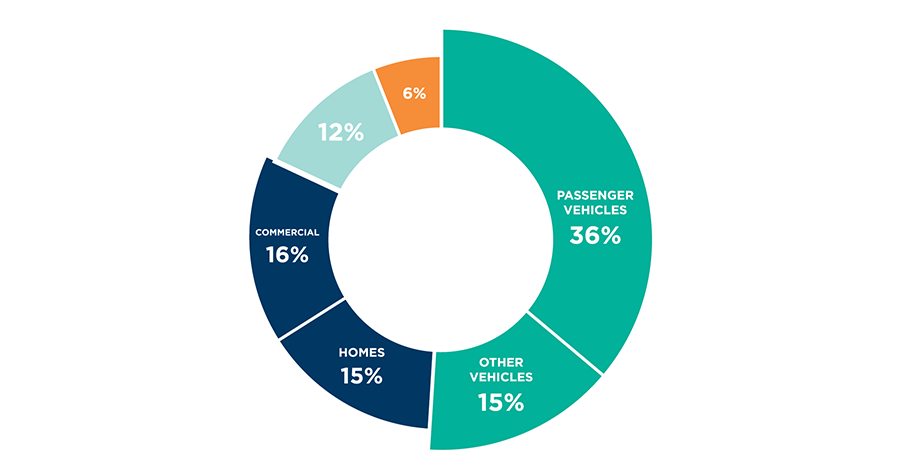
Appliances play an important role in having a healthier home. Water heaters and space heating equipment powered by gas are among the largest sources of emissions from building appliances, accounting for 90% of total emissions. In 2019, residential natural gas combustion in the Bay Area produced roughly the same amount of nitrogen oxide (NOx) emissions as passenger vehicles.¹
As research continues to deepen our understanding of the relationship between gas use in the home and indoor and outdoor air quality, the equipment you choose to use in your home has become more impactful on you and your family’s health than initially thought. While the Bay Area is a leader in innovation, health, and climate, there is a growing opportunity to use these findings to build a healthier, safer tomorrow.
We sat down with Dr. Lisa Patel, Executive Director of the Medical Society Consortium on Climate and Health and a practicing pediatric hospitalist at Stanford, to understand how air quality actually impacts our health.
Her career bridges environmental science and medicine, including an EPA fellowship focused on clean air and water initiatives and national advocacy through the American Academy of Pediatrics. She is also a frequent media voice on climate, health, and equity, with expertise featured in The New York Times, CNN and other national outlets.
“You’re not choosing to expose your family to [pollution] the way you might choose a food or an activity; it’s baked into the home itself, day after day, whether you’re paying attention to it or not.”
—Dr. Patel
Q: What makes a home healthy?
A: A healthy home starts with good indoor air that is free of combustion pollutants, mold, and excess humidity. It’s also about the materials and systems working together: proper ventilation, appliances that don’t burn fuel indoors, and a stable, comfortable temperature without relying on systems that compromise air quality to achieve it. Increasingly, I’d add: a home resilient to the climate conditions we’re now facing regularly, including extreme heat and wildfire smoke days, since a “healthy home” today has to hold up under conditions that didn’t used to be the norm. Cool rooftops, more greenery, and a properly weatherized home.
Q: How do you see air quality impacting your patients today?
A: I see it constantly in my work as a pediatric hospitalist: children usually under the age of 5 showing up in our emergency rooms with their lungs so filled with inflammation they feel like they can’t breathe. Poor air quality, whether outdoor pollution or pollutants generated inside the home, is a major driver of childhood asthma, one of the most common reasons children end up in the hospital. And the effects aren’t limited to asthma. Air pollution is linked to impaired lung development in children, cardiovascular disease, and even cognitive effects. Indoor air quality matters just as much as outdoor, because we spend roughly 90% of our time indoors, and for young children, much of that time is often at home.
Q: What impact do gas appliances have on my indoor air quality?
A: Gas appliances such as stoves, water heaters, and furnaces burn fuel indoors, and that combustion releases pollutants including nitrogen dioxide (NO2), carbon monoxide, formaldehyde, and fine particulate matter, even when the appliance is working exactly as designed. Gas stoves in particular are a well-documented source of elevated indoor NO2, and research has linked homes with gas stoves to higher rates of childhood asthma. These pollutants build up especially in smaller or less ventilated kitchens, which is often where families, including young children, spend a lot of time. One study has attributed 13% of pediatric asthma cases to gas stoves. There is so much in childhood asthma that we can’t modify, but gas stoves are a place where we can take action.
Q: How does this concern compare to all of the other health concerns and decisions that we are faced with every day?
A: We often take our air quality for granted because this country did a lot to clean it up. But now we’re backsliding both because of policy decisions that are resulting in us burning more fossil fuels, and because of worsening wildfire smoke that is erasing our clean air quality gains. I understand air quality can feel like one more thing on an already long list of health decisions parents face. But what makes it different is that it’s often invisible, continuous, and study after study shows that air pollution is bad for our brains, lungs, and heart. You’re not choosing to expose your family to it the way you might choose a food or an activity; it’s baked into the home itself, day after day, whether you’re paying attention to it or not. And unlike many health risks that require ongoing behavior change, this is often a one-time decision, choosing an appliance, that then quietly protects your family for years afterward.
Q: The Bay Area Air District is considering rules that require newly manufactured water heaters and furnaces to meet zero-NOx emission standards beginning in 2027 and 2029, respectively. What is a zero-NOx water heater and furnace and how does it impact my air quality?
A: The best, zero NOx alternative to gas-powered heating equipment already exists today, which are all-electric heat pumps. Heat pump technology is used for water heating and for HVAC, they offer heating and cooling in one device. They are also 3-4x more efficient than gas equivalents. More and more homeowners and builders are embracing these technologies, and here in the Bay Area, as the climate has gotten warmer, the benefit of installing heat pump HVAC is that many homes will get the added benefit of cooling, which is also important from a health perspective.

Q: If a child came into your office with asthma, would replacing the gas stove in the child’s home be something you’d recommend, or is the impact too small to matter?
A: There was a study that came out in August of 2026 that addressed this exact question. A study looked at a population of asthmatics and found that switching from gas to electric resulted in similar improvements in asthma symptoms as commonly used asthma medications. At the same time, making the switch can be expensive. If a family can’t afford it, I also talk about portable induction cooktops. One library on the peninsula is offering a program to “check-out” a portable induction cooktop for families to try before making the switch.
Q: What’s the real impact of gas stove emissions – if we grew up with them, are we cooked (metaphorically)? Does switching to induction make any difference or improvement if gas has been used for most of an adult life?
A: You’re not “cooked.” Exposure to indoor air pollutants is generally about cumulative and ongoing risk, not a fixed dose you’ve already locked in. Switching to induction reduces your exposure going forward, and reducing exposure at any point reduces risk going forward too. Think of it like quitting smoking: the harm from years of exposure doesn’t fully reverse overnight, but every year without that exposure going forward is a year your lungs and cardiovascular system aren’t absorbing more of it. For children in the home now, the benefit of switching is even more direct, since their lungs and immune systems are still developing.
Q: Does turning the kitchen fan on or opening a window while cooking with gas eliminate the impact of these harmful pollutants in my home?
A: Every step you take can reduce your risk, but it’s important to understand that eliminating the exposure comes with switching the appliance. A properly vented range hood that vents outdoors (not a recirculating fan) can meaningfully reduce pollutant concentrations, and opening windows helps with air exchange. But many homes don’t have adequate ventilation, people don’t consistently use the fan every time they cook, and even good ventilation doesn’t fully offset the pollutants released, especially during longer cooking sessions. Ventilation is a helpful risk-reduction step, not a solution — the most effective way to eliminate the exposure is to remove the combustion source itself.